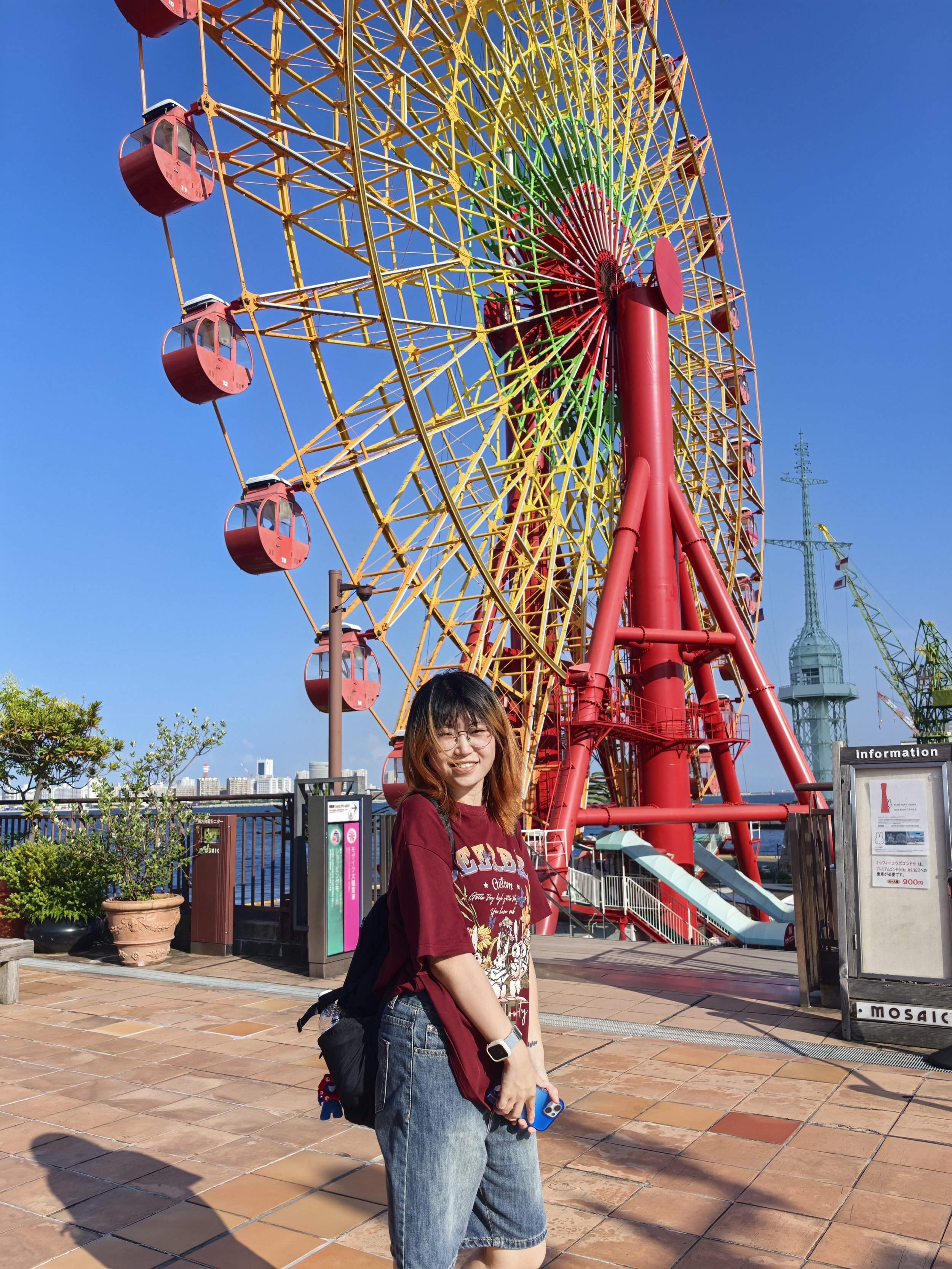
Nova Xu| Undergraduate Research Assistant
As an undergraduate music student of East Asian descent at the University of Alberta Augustana Campus, my connection to the From the Voices of Children project grows from my own lifelong relationship with music and singing. I am currently studying classical guitar and aspire to become a virtuoso classical guitarist and music educator. Music has been central to my life for as long as I can remember, and my musical experiences have taken place across several countries, including Japan, China, the United Kingdom, the United States, and Canada.
I began my musical journey as a koto player, performing on stage by the age of five. While living in Japan and China, I performed various East Asian zither instruments in different ensembles and musical contexts. At around the age of 14, I picked up a guitar for the first time, and I have never stopped playing it since.
Although I loved performing instrumental music, I also had a strong desire to sing. However, opportunities to explore singing in school were limited. At one point, I hoped to join the choir, but I was persuaded to remain in the band because my teachers needed a strong zither player. More broadly, music education in the schools I attended was often constrained by academic priorities, and most students (myself included) were expected to give up music classes for subjects considered more “important”. In addition, my parents were concerned that playing guitar might distract me from more traditional academic pathways. These experiences made me highly aware of how access to music education can vary depending on institutional, cultural, and educational expectations.
Before beginning my studies at the University of Alberta Augustana Campus, I was close to completing a four-year degree in Earth Sciences at the university’s main campus. During my first year, the COVID-19 pandemic began and continued through much of my undergraduate experience. As my courses moved online, I found it increasingly difficult to reconnect with in-person academic life when campuses reopened. This period became a time of reflection in which I began to question the direction of my studies and consider what I truly wanted to pursue. Although I had invested several years into Earth Sciences, I realized that my strongest sense of purpose and motivation came from music. During this time away from formal instruction, I spent nearly two years creating music independently, taking small commissions, composing, and developing my musicianship outside institutional structures. My parents initially opposed this path, believing that music was not a practical field of study. However, after many conversations and reflection, I was able to express how meaningful music was to me and how important their trust, understanding, and support would be for my education. Ultimately, this experience strengthened my commitment to music and affirmed my belief that music can open many different paths, and I hope to bring this awareness to others.
My experiences volunteering in elementary school music classrooms have further shaped how I think about children and their relationships with singing. Observing choir rehearsals and classroom music activities has shown me that children approach singing in diverse ways. Some participate with immediate confidence and enthusiasm, while others explore their voices more gradually. These experiences remind me that each child carries a unique musical identity and that supportive learning environments play a crucial role in helping children feel comfortable expressing themselves.
As an undergraduate researcher on the From the Voices of Children project, I approach this work with curiosity and humility. Working alongside experienced scholars and educators, I recognize that I am still learning while contributing to the research process. My role is to listen carefully and reflect on how children describe their own experiences with singing in school and in their everyday lives. My international musical background also encourages me to remain attentive to the cultural assumptions that can shape music education practices, allowing me to contribute a perspective informed by multiple educational and musical traditions.